
When a Staffy's behaviour keeps getting worse, ask whether it could be neurological
Behavioural changes, anxiety, and loss of coordination in a Staffordshire Bull Terrier can have a physical cause. Knowing what to look for, and what to ask your vet, could make all the difference.
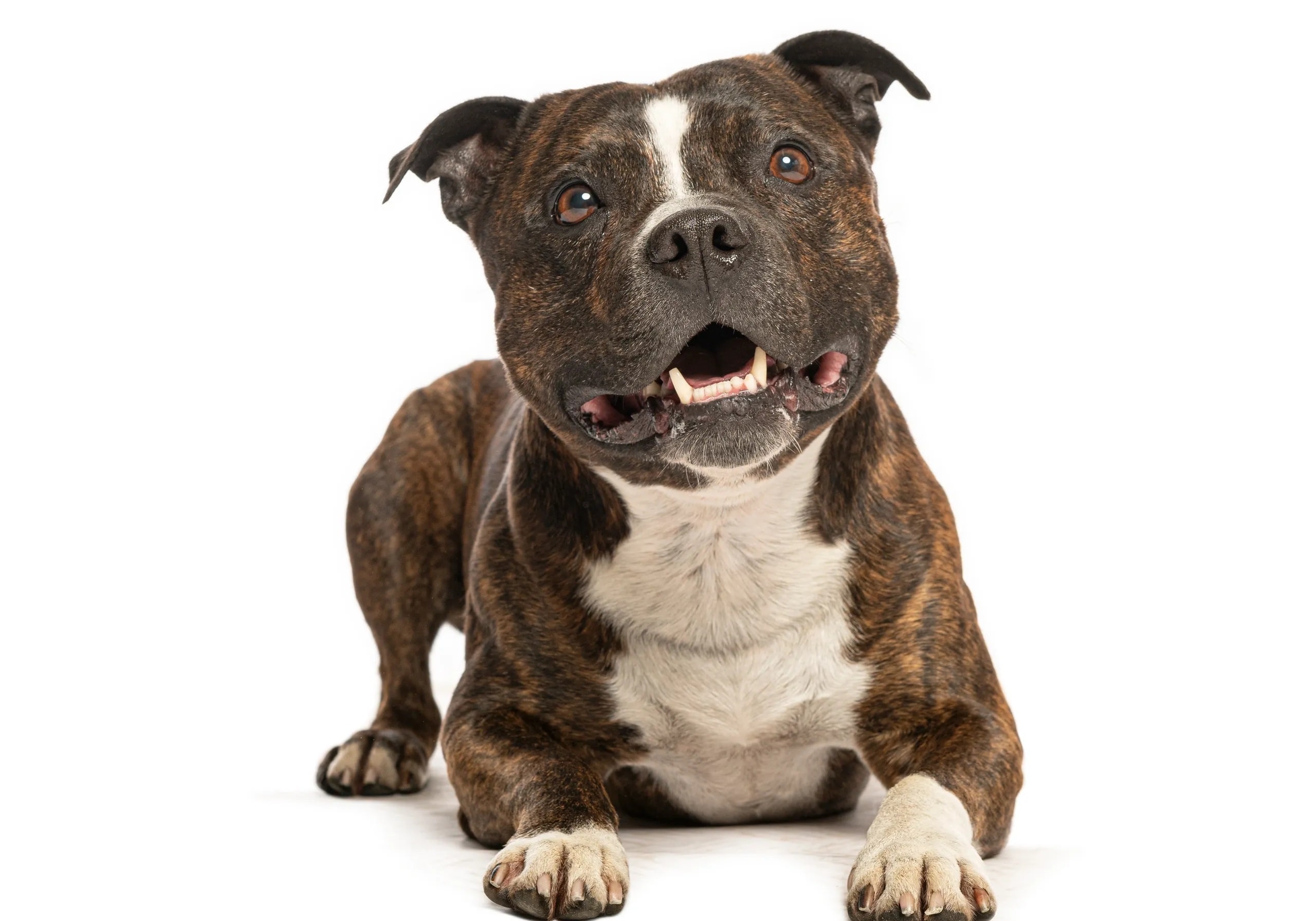
Staffordshire Bull Terriers are one of the most loving, loyal breeds in the world. They are also a breed in which unexplained neurological conditions can be missed for months, or years, because the early signs look like behaviour problems.
That is what this campaign is about.
What we are seeing
Some Staffies develop progressive changes that do not respond to training or behaviour support in the way you would expect. The signs can include:
- Increasing anxiety, fearfulness, or aggression that keeps getting worse
- Vision problems, particularly in low light
- Loss of coordination or balance
- Difficulty navigating familiar spaces
These signs can have a neurological cause. They are not always a training problem, a rehoming problem, or a temperament problem. They may be a medical problem.
Why it gets missed
The behavioural symptoms of a neurological condition are frequently attributed to anxiety, trauma, or training issues. Dogs are referred to behaviourists, put on medication, or rehomed, when the real cause is physical.
Vets who are unfamiliar with inherited neurological disease in the breed may not consider it. Owners who notice their dog struggling may not know what questions to ask.
This is why awareness matters. The earlier a neurological cause is on the radar, for owners, vets, behaviourists, and breeders, the sooner affected dogs can be given the right support, and the sooner cases can be properly investigated.
Hendrix's case
Hendrix's Legacy was started because of one dog. Hendrix developed progressive neurological signs and died at five and a half years old. What he had has not been identified. He was never diagnosed, no laboratory test was carried out, and no sample was kept.
We wrote to the Canine Genetics Centre at the University of Cambridge in October 2026. They replied, asked whether Hendrix had ever been diagnosed or tested, and pointed out that different inherited conditions can look very similar. With our consent, Hendrix's veterinary records have now been passed to the Centre so his case can be looked at properly.
We no longer say NCL4A is the likely explanation for what Hendrix had. It may be inherited, and it may turn out to be a form of NCL, but nobody yet knows. The Centre has not endorsed this campaign, and there are no results to report.
What you can do
If your Staffy's fear or reactivity keeps getting worse despite good training, or comes with changes in balance, movement, or sight, talk to your vet and ask whether a neurological cause should be looked at.
If a dog is put to sleep with unexplained neurological signs, ask your vet whether a blood sample can be kept. Without one, the cause can never be investigated.
If something new is affecting our breed, it will be found the way other inherited conditions in Staffies were found: by people noticing, recording, and speaking up.
What about NCL4A testing?
NCL4A is a real inherited neurological disease in Staffordshire Bull Terriers, and a DNA test for it does exist. However, we are no longer asking breeders to test for NCL4A as a routine, because we do not yet know whether NCL4A is what affected Hendrix or other dogs whose cases prompted this campaign.
If you have questions about DNA testing for known inherited conditions in Staffies, including L-2-HGA and hereditary cataract, speak to your vet or contact the Canine Genetics Centre at the University of Cambridge.
How you can help
Share this article. Talk to your vet. If you have seen unexplained neurological signs in a Staffy, get in touch with us. Every case that is noticed and recorded brings us closer to understanding what is happening in the breed.
Read more about what we know and do not know, or download our free guides for owners, vets, breeders, and rescues.
Explore Topics
Written by
Hendrix\'s Legacy
Content creator and writer sharing insights and stories.


